Home
 River Cruising Blog
 About Me
 Reviews
 River Cruise News
 Contact
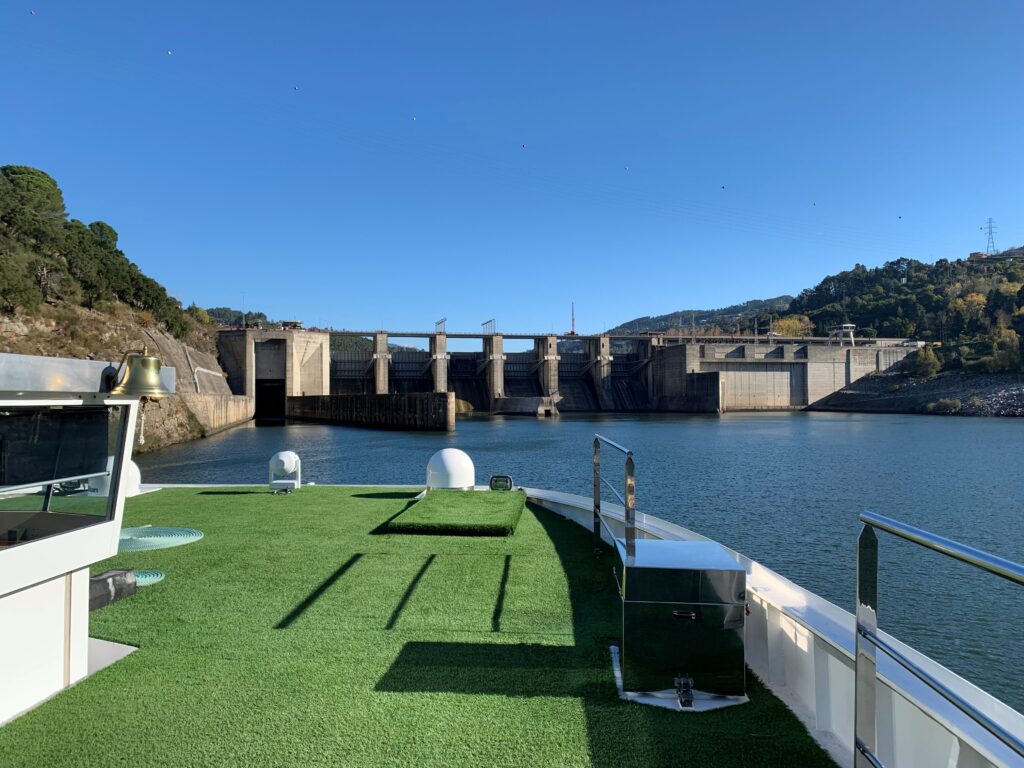
River cruising is all about the gentle pace, the changing landscapes, the ease of travel – but sometimes, there’s a moment of pure drama. For me, that moment came as we approached the Carrapatelo lock.
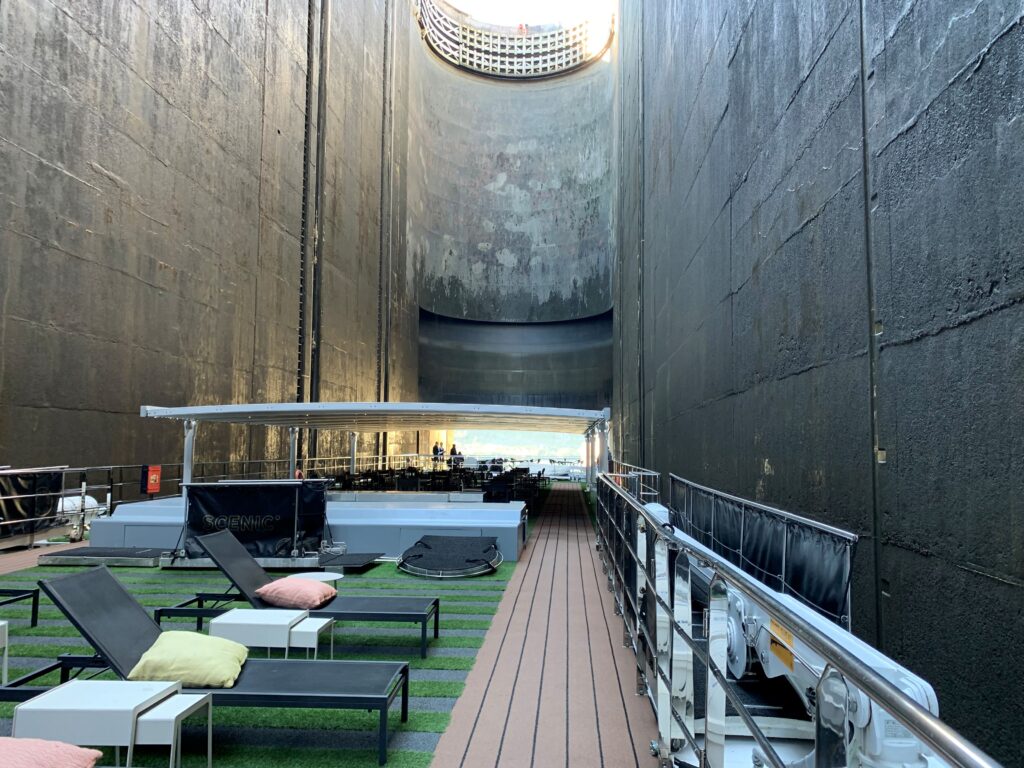
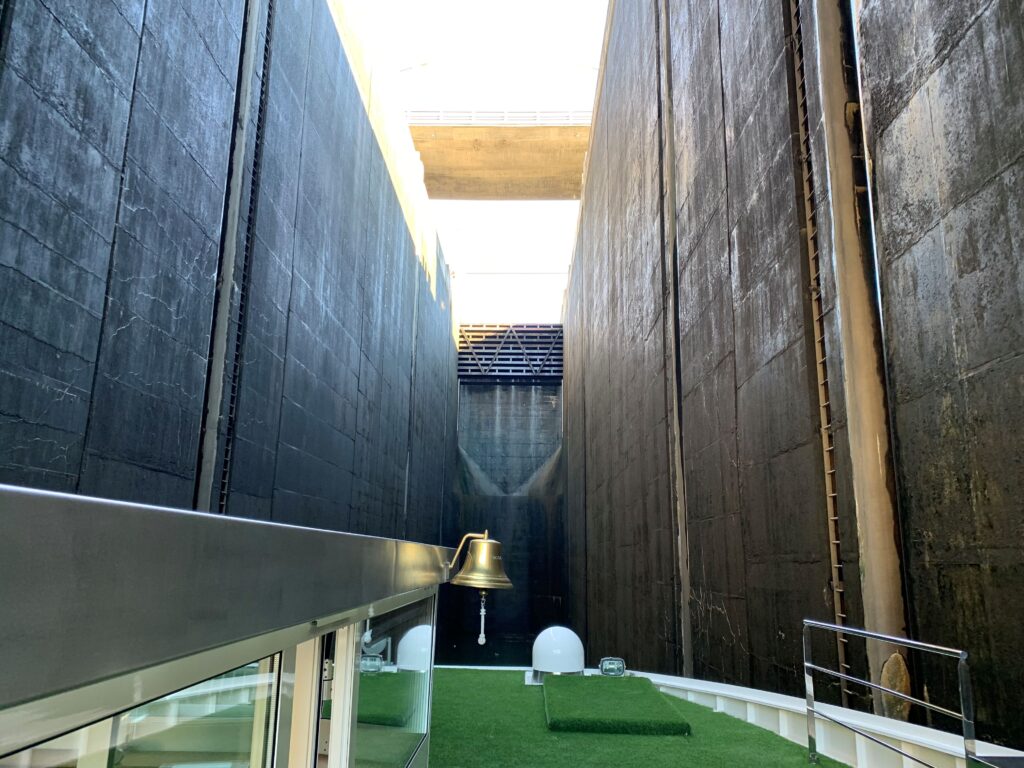
Set in the heart of the Douro Valley, Carrapatelo is not just any lock. It’s the tallest in Europe, with a staggering 35-metre water level change. You don’t quite grasp its scale until you’re inside – the ship dwarfed by smooth, towering walls of concrete, the light narrowing above as the gates close behind. The contrast between this impressive man-made structure and the natural beaty of the river is striking.
As the water began to rise, lifting our ship steadily upwards, I was struck by the quiet power of the experience. When the upper gates finally lowered and the valley stretched out ahead, it was a moment I’ll never forget.
It’s interesting to note that the incredible Panama Canal, where ships are raised and lowered between the oceans, provides less elevation than the Carrapatelo lock. But here, in this peaceful corner of Portugal, the engineering was just as impressive – but on a more intimate scale.
Elevation compared:
Panama Canal: raises ships 85 feet (26m)
Carrapatelo Lock: elevation 115 feet (35m)
Carrapatelo was the first of five locks built along the Portuguese stretch of the Douro as part of a major project to make the river navigable. It allows river cruise ships to navigate the Douro’s rugged terrain and bring travellers like me to parts of the country that would otherwise remain hidden. Carrapatelo is the most dramatic, not only because of its height but because of how suddenly it appears, nestled among vineyard-covered slopes.
Construction began in 1964 and was completed in 1972, with the dual purpose of generating hydroelectric power and allowing commercial and passenger traffic to pass through safely. Before that, the Douro was a wild and unpredictable river; shallow, fast-moving in places, and broken up by treacherous rapids. Now, vessels can cruise all the way from Porto to the Spanish border.
I learned from our ship’s crew just how carefully coordinated each lock transit is. Schedules are tightly managed with freight and passenger traffic sharing limited daily time slots. The precision is impressive, but from the passenger perspective, it feels seamless.
It’s easy to see why many people (me included) consider this experience one of the highlights of a Douro river cruise. Yes, the valley itself is beautiful – steep hills, terraced vines, and picturesque villages, but the chance to witness the mechanics of the river, to feel it working beneath you, adds another layer of interest.
So, if you ever find yourself on a Douro cruise and your itinerary includes Carrapatelo, be sure to go onto the sundeck and take it in. It’s not just a lock – it’s part of the river’s story and an incredible engineering feat.
And if you’re thinking about your own trip and wondering which itinerary or cruise line might be right for you, I’d be happy to help.